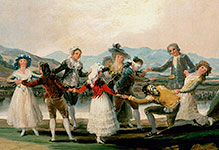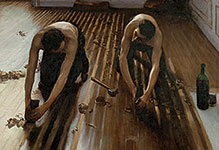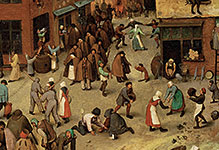
Daily Life


Work, Leisure, Clothing and Textiles, Politics and Portraits, Furniture, Houshold, Funerals, Death, Murder, Family.


7 subcategories
Agriculture

AGRICULTURE

Clothing and Textiles

CLOTHING AND TEXTILES

Furniture

FURNITURE

Illness and Diseases

ILLNESS AND DISEASES

Industry

INDUSTRY

Leisure

LEISURE

Work

WORK

8,730 photos
La mort de Leonard de Vinci - The death of Leonardo 
da Vinci, 1818.
Pencil and pen, brown and black ink, brown wash.
Paper, 38 x 48,2 cm
RF 1442
#33010922

La mort de Leonard de Vinci - The death of Leonardo da Vinci, 1818. Pencil an...

Niccolo Paganini,violinist. 1819.
Pencil on paper.
29,5 x 21,6 cm
RF 4381
#33010923

Niccolo Paganini,violinist. 1819. Pencil on paper. 29,5 x 21,6 cm RF 4381

Francoise Leblanc, wife of Jacques-Louis, secretary to Elisa,
sister of Napoleon I and Grand-Duchess of Tuscany, 1823.
Paper, pencil.
45,5 x 35,1 cm
RF 5643
#33010924

Francoise Leblanc, wife of Jacques-Louis, secretary to Elisa, sister of Napoleo...

Etude de draperie d'une figure feminine - Study of the drapery of a female figure; sketch for the Apotheosis of Homer. From the collection of painter Edgar Degas.
Paper, pencil, hightened with white.
30,2 x 25,6 cm
RF 4512
#33010927

Etude de draperie d'une figure feminine - Study of the drapery of a female figur...

Marie Marcotte de Sainte Marie, sister-in-law of Marcotte
d'Argenteuil, one of Ingres' best friends.
Paper, pencil.
32,4 x 24 cm
RF 41393
#33010928

Marie Marcotte de Sainte Marie, sister-in-law of Marcotte d'Argenteuil, one of...

Selfportrit of the artist, 1835.Signed in pencil "Ingres a ses eleves" (to his students).
Paper, pencil, 29,9 x 21,9 cm
RF 9
#33010930

Selfportrit of the artist, 1835.Signed in pencil "Ingres a ses eleves" (to his s...

Portrait of Andrea Quaratesi, around 1532. This is the only surviving portrait drawing by Michelangelo. It shows one of several noble youths much admired by Michelangelo.
Black chalk on paper.
PD 1895-9-15-519
#33010940

Portrait of Andrea Quaratesi, around 1532. This is the only surviving portrait d...

'An Allegory of a Prosperous Germany', 1586. Seated in the centre is Pallas Athene, the Greek goddess of wisdom. She is attended by Bacchus, god of wine, and Ceres, goddess of wheat. They represent the abundance of drink and food. In the foreground are two German river gods: the Rhine on the left, the Danube on the right. Water flows from beside them, filled with eels, fish and birds.In the sky above, various figures with Latin titles represent further aspects of Germany's victorious and harmonious rule. The figure of Victory rides an eagle on the left and on the right, the figures of Religion, Prudence and Understanding, represent peace. Faith and Constancy rule in the centre, topped by Justice who is crowned by Fame. In the background are details of life and work which reflect the allegorical figures above. To the left are scenes of mining, hunting and warfare. To the right are scenes of shipping and trade, astronomy, painting, printing and building.
PD, 1949-4-11-105
#33010956

'An Allegory of a Prosperous Germany', 1586. Seated in the centre is Pallas Athe...

'Allegory on the Equality of all Mankind in Death', 1599. The complex meaning of this image is derived from the Latin inscriptions. The most important is that at the top of the tent: "MORS CERTA RELIGONIBUS AEQVAT" (Death makes the sceptre and spade equal). Death is therefore the equaliser of people of all classes, from the peasant on the left to the Emperor on the right. The skeletons show no social distinction. On the rim of the tent stand an owl and a lamp, symbols of death and life respectively. The round scenes show the Fall of Man and the Crucifixion, representing the introduction and the conquering of death. The Last Judgement painted in the centre reminds the viewer of Divine Judgement. The boy blowing bubbles is a traditional emblem of transience dictated by the words inscribed over his head: "HOMO BULLA" (Man is [as] a soap bubble). The drawing and print of this theme of mortality and the passing of human existence are therefore designed to encourage the renunciation of all worldly pleasures and to prepare the viewer for death. De Gheyn sympathized with Protestant or Calvinist teachings as this drawing fully illustrates.
PD, 1895-9-15-1031
#33010957

'Allegory on the Equality of all Mankind in Death', 1599. The complex meaning of...

'Portrait of an English Woman', c1535. She is drawn in red and black chalk with touches of bodycolour to highlight her features. Holbein used the point of a brush with black ink to reinforce the edge of her cap and facial features. Her eyebrows and eyelashes are particularly delicate. It is likely that she was a lady at the English court of Henry VIII. The original paper was prepared with a soft pink ground, which suggests her flesh tones. However, at some stage the drawing was cut out from its original paper and laid down on another sheet so that the figure is now silhouetted.
PD, 1910-2-12-105
#33010961

'Portrait of an English Woman', c1535. She is drawn in red and black chalk with...

Rossetti lamenting the death of his wombat, 1869. Dante Gabriel Rossetti loved exotic animals and began to collect them with a passion after the tragic death of his wife Elizabeth Siddal in 1862. He had moved to 16 Cheyne Walk in Chelsea, a house with a large garden that soon became a miniature zoo. The wombats had a special place in Rossetti's heart. In a letter to his brother he described the arrival of the first one as 'a Joy, a Triumph, a Delight, a Madness'. This drawing commemorates the short-lived second wombat. Instead of being laid to rest in the tomb depicted in the background, the marsupial was stuffed and placed in Rossetti's entrance hall.
PD, 1939-5-13-6
#33010965

Rossetti lamenting the death of his wombat, 1869. Dante Gabriel Rossetti loved e...

Scenes in a theatre tea-house, handscroll painting, Edo period, 1685. In the background right a blind masseur works on the shoulders of a client attended by a young actor serving sake while another plays the shamisen. Another actor entertains a samurai client in a bedroom area furnished with quilts and a large mosquito-net.
JA,JP 1375 (1881.12-101710)
#330110 1

Scenes in a theatre tea-house, handscroll painting, Edo period, 1685. In the bac...